

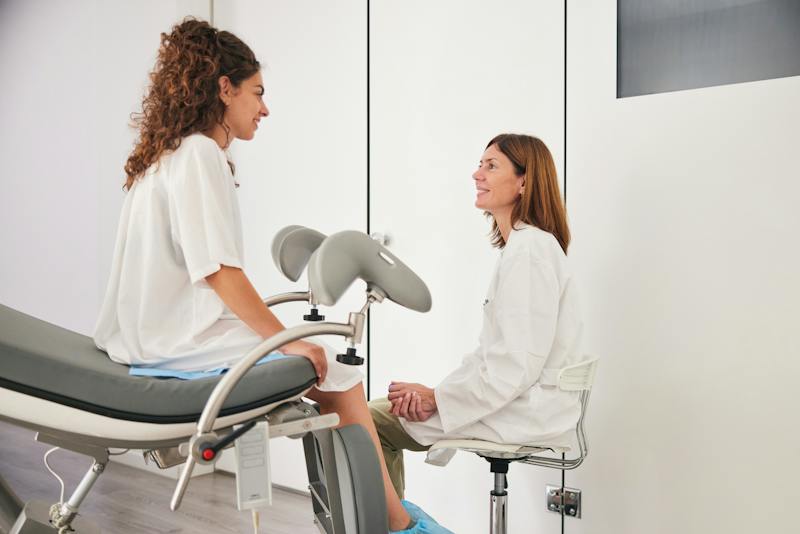
Endometriosis is usually diagnosed through a combination of your symptom history, a pelvic exam, and imaging such as a transvaginal ultrasound. Under updated 2026 guidance from the American College of Obstetricians and Gynecologists (ACOG), those findings can be enough for a presumptive diagnosis and to begin treatment. Laparoscopy with a tissue biopsy is still the only way to confirm the condition definitively, but it is no longer a required first step.
If you are seeking an endometriosis diagnosis in Austin, Bee Cave, or Westlake, the process starts with a gynecologist who takes pelvic pain seriously. Dr. Lisa M. Jukes, M.D., F.A.C.O.G., is a board-certified OB/GYN, an Austin Monthly Top Doctor since 2015, and one of the top robotic gynecologic surgeons in the nation. In this blog, we draw on her experience to walk you through each step of the diagnostic process, so you know exactly what to expect at your appointment.
Endometriosis Symptoms That Warrant an Evaluation
Endometriosis symptoms most often center on pelvic pain that follows your menstrual cycle, though the condition can also affect your bowels, bladder, and fertility. According to Mayo Clinic, pain is the most common symptom, and some patients also notice bloating, nausea, or fatigue around their periods. Common signs that are worth discussing with a gynecologist include:
- Period pain that is severe or gets worse over time
- Chronic pelvic or lower back pain between periods
- Deep pain during or after sex
- Painful bowel movements or urination, especially during your period
- Heavy menstrual bleeding or bleeding between periods
- Bloating, nausea, or fatigue that flares with your cycle
- Difficulty getting pregnant
Symptoms can begin in the teen years. ACOG's new guidance specifically aims to improve care for both adolescent and adult patients, and Dr. Jukes sees patients at every life stage. If painful periods are keeping you or your daughter home from school or work, an evaluation is a reasonable next step.
Why Does Endometriosis Take So Long to Diagnose?
Endometriosis takes so long to diagnose because its symptoms overlap with many other conditions and, until recently, confirmation typically depended on surgery. ACOG reports that people wait an average of 4 to 11 years from the start of symptoms to a diagnosis. That delay persists even though the condition affects an estimated 1 in 10 women of reproductive age, according to Mayo Clinic.
Painful periods are often dismissed as normal, so many patients wait years before bringing them up. Bowel symptoms can also lead to a misdiagnosis of irritable bowel syndrome, a pattern documented in a case review by the Agency for Healthcare Research and Quality.
The key takeaway: if your pain disrupts work, school, exercise, or intimacy, it deserves an evaluation. Severe period pain is common, but it is not something you should have to push through on your own.
How ACOG's 2026 Guidelines Changed Endometriosis Diagnosis
ACOG's 2026 guidelines changed endometriosis diagnosis by supporting a presumptive clinical diagnosis based on your history, symptoms, and exam findings, rather than requiring surgery first. Released in February 2026 as Clinical Practice Guideline No. 11, “Diagnosis of Endometriosis,” the document is ACOG's first set of comprehensive recommendations focused on how the condition is diagnosed.
In practical terms, a clinical diagnosis means relief can start sooner. Your gynecologist can recommend medical therapy while imaging or further evaluation continues, instead of leaving you to manage pain while you wait for a surgical answer.
Shared decision-making is another cornerstone of the new guidance. Some patients prefer to pursue a surgical diagnosis, while others would rather begin medical treatment based on symptoms and imaging. At Modern Women's Health, Dr. Jukes reviews both paths with you and helps you choose the approach that fits your symptoms, fertility plans, and personal priorities.
What Happens at Your Gynecology Appointment for Endometriosis?
At your gynecology appointment for endometriosis, Dr. Jukes or one of the Modern Women's Health providers will typically start with a detailed conversation, then perform a pelvic exam and, in many cases, an ultrasound. Each step adds a piece of the picture.
Your Symptom and Health History
Your health history is the foundation of an endometriosis diagnosis. Expect questions about when your pain occurs, where you feel it, how it has changed over time, and how it affects your daily life.
Beyond pain, your provider will ask about your periods, bowel and bladder symptoms, discomfort during sex, family history, and any treatments you have already tried. Honest, specific answers help narrow down the cause faster.
The Pelvic Exam
During a pelvic exam, your provider manually checks for abnormalities such as tender areas, nodules, or cysts, as Mayo Clinic explains. If the exam is uncomfortable because of your pain, tell your provider so they can adjust or pause.
A normal exam does not rule out endometriosis. Small, superficial implants often cannot be felt, which is why imaging and your symptom history carry so much weight.
Pelvic Ultrasound
A transvaginal ultrasound is the first-line imaging test ACOG recommends for suspected endometriosis. Modern Women's Health offers pelvic ultrasound in the office, so imaging can often happen without a separate trip.
Ultrasound has limits worth understanding. According to Mayo Clinic, it cannot show superficial endometriosis, but it can reveal endometriomas (cysts linked to the condition) and sometimes deeper nodules.
When an MRI May Be Recommended
An MRI may be recommended when deep endometriosis is suspected, such as disease growing into the bowel or bladder. Mayo Clinic radiologist Dr. Wendaline VanBuren notes that a dedicated endometriosis MRI or ultrasound is well suited to identifying deep disease, while superficial disease still requires laparoscopy for a definitive diagnosis.
Is There a Blood Test for Endometriosis?
There is currently no reliable blood test for endometriosis. ACOG's 2026 guideline advises against using blood tests, urine tests, or other biomarkers to establish a diagnosis, because they are not yet accurate enough for routine use.
You may have heard of CA-125, a marker that is elevated in some people with endometriosis. The National Library of Medicine's InformedHealth resource explains that these blood tests are generally no longer used to diagnose the condition. Your provider may still order lab work to rule out other causes of your symptoms.
Research into noninvasive testing is ongoing, and Cleveland Clinic's Director of Endometriosis has pointed to active work on blood-based markers. For now, your history, exam, and imaging remain the most useful diagnostic tools.
When Is Laparoscopy Used to Diagnose Endometriosis?
Laparoscopy is used to diagnose endometriosis when symptoms persist despite treatment, when imaging results are unclear, or when you want a definitive answer, such as during fertility planning. During the procedure, a surgeon views the pelvic organs through a small camera and removes suspicious tissue for biopsy. Mayo Clinic notes that this remains the only way to make a definitive diagnosis.
One major advantage is that diagnosis and treatment can often happen in the same procedure. ACOG recommends treating suspected lesions during the initial laparoscopy when possible, which may help patients avoid a second surgery.
Dr. Jukes performs these procedures using the da Vinci® surgical system, a robotic platform designed for minimally invasive surgery through small incisions. Since 2003, she has completed more than 1,400 da Vinci procedures, and she serves as a national proctor who trains other surgeons on the system. She is also on staff at most Austin-area hospitals and surgery centers.
How to Prepare for Your Endometriosis Appointment
Preparing for your endometriosis appointment helps your provider see the full picture of your symptoms in a single visit. Before you come in, consider gathering:
- A symptom diary covering two or three cycles, noting when pain starts, where you feel it, and how severe it is on a 1 to 10 scale
- Details about your periods, including length, flow, and any bleeding between cycles
- A list of pain relievers, birth control, or other treatments you have tried, and how well they worked
- Family history of endometriosis, especially in a mother, sister, or aunt
- Your fertility goals, whether now or in the future
- The questions you want answered before you leave
Questions worth asking include whether your symptoms could be endometriosis, what other conditions might explain them, whether you need imaging, and what your treatment options are if you start before a confirmed diagnosis.
What Happens After an Endometriosis Diagnosis?
After an endometriosis diagnosis, Dr. Jukes builds a treatment plan around your symptoms, your age, and whether you hope to become pregnant. Options generally fall into two groups: medical therapy, such as hormonal birth control and other medications that help control symptoms, and surgical treatment to remove endometriosis implants.
Some patients also have adenomyosis, a related condition in which endometrial tissue grows into the muscular wall of the uterus. To learn more about your choices, visit our Endometriosis Treatment page or our overview of endometriosis.
Questions About Endometriosis? Dr. Jukes and the Modern Women's Health Team Are Here to Help
Pelvic pain should never be something you simply learn to live with. Dr. Lisa M. Jukes is a board-certified OB/GYN, an Austin Monthly Top Doctor since 2015, and a national da Vinci proctor who pairs careful listening with advanced diagnostic and surgical expertise. Her female-led team offers a comfortable, judgment-free setting where your symptoms are taken seriously from the very first visit.
If you are experiencing symptoms of endometriosis in Austin, Bee Cave, or Westlake, request an appointment at our Austin office on Bee Caves Road or our Bee Cave office on RR 620 South. Our team will help you find answers and a clear path toward relief.
This information is provided for educational purposes only and does not replace a consultation with a licensed medical provider. Outcomes, risks, and suitability vary from patient to patient.